Quick Answer:
-
Apartment average rent: AED 90,940 per year as of April 2026, up 4.4% year-on-year
-
Villa average rent: AED 229,000 per year, up 9.1% year-on-year as of April 2026
-
Highest yield zones: International City 8.9%, Dubai Silicon Oasis 8.5%, Dubai South 8.1%
-
Rental growth trend: Annual growth eased from 6.2% in December 2025 to 1.5% in April 2026
-
For Australian investors: Dubai housing rent delivers 2 to 3 times Australian capital city gross yields
Most Australian investors researching Dubai start with yields. What they quickly realize is that yield is just the output. The real question is what Dubai housing rent levels actually look like in 2026, which zones generate the strongest landlord returns, and whether those rent levels are sustainable or inflated by a cycle that has already peaked.
Dubai's rental market entered 2026 in a moderation phase. After two years of sharp increases where rents rose approximately 17% on average between 2022 and 2023, the market has settled into flatter, more selective conditions. This is not a negative signal for Australian investors. Moderation after a sustained growth period is a sign of market maturity, not collapse. Rents are still 4.4% higher year-on-year for apartments and 9.1% higher for villas compared to April 2025. The fundamentals supporting Dubai housing rent remain structural, driven by population growth, expat demand, and constrained supply in established zones.
This guide gives Australian investors the complete picture on Dubai housing rent in 2026. You will learn actual rent ranges by zone and property type, how yield compares across communities, what tenancy costs your future tenant will face, and how Dubai rent levels stack up against Australian capital city benchmarks. Every number in this guide is sourced from current DLD transaction data and live market reporting.
Dubai Housing Rent by Property Type
Understanding how Dubai housing rent breaks down by property type is the first step for Australian investors building a rental income model. Apartments and villas move independently, attract different tenant profiles, and deliver meaningfully different yield outcomes.
Apartment Rent Ranges
Apartments account for approximately 74% of all residential transactions in Dubai, making them the dominant asset class for yield-focused Australian investors. Dubai's average gross apartment yield is approximately 7.0%, among the highest globally. Affordable communities like International City at 8.9% and Dubai Silicon Oasis at 8.5% deliver the highest returns, while premium areas like Palm Jumeirah at 4.7% offer lower yields but stronger capital appreciation.
Here is the complete Dubai housing rent breakdown for apartments across all major investor zones in 2026:
|
Zone |
Studio Annual Rent |
1-Bed Annual Rent |
2-Bed Annual Rent |
Gross Yield |
|
International City |
AED 30,000 to 40,000 |
AED 45,000 to 60,000 |
AED 65,000 to 80,000 |
8.9% |
|
Dubai South |
AED 35,000 to 50,000 |
AED 55,000 to 70,000 |
AED 75,000 to 95,000 |
8.1% |
|
JVC |
AED 40,000 to 55,000 |
AED 65,000 to 85,000 |
AED 90,000 to 115,000 |
7.8% |
|
Business Bay |
AED 55,000 to 75,000 |
AED 80,000 to 110,000 |
AED 120,000 to 160,000 |
6.5% |
|
Dubai Marina |
AED 65,000 to 90,000 |
AED 85,000 to 120,000 |
AED 130,000 to 180,000 |
6.2% |
|
Downtown Dubai |
AED 75,000 to 100,000 |
AED 95,000 to 140,000 |
AED 150,000 to 220,000 |
5.5% |
|
Palm Jumeirah |
AED 100,000 to 140,000 |
AED 140,000 to 200,000 |
AED 220,000 to 320,000 |
4.7% |
For Australian investors prioritizing rental income, the data confirms that affordable zones consistently outperform premium zones on yield percentage. JVC and Dubai South deliver 7.8 to 8.1% gross at entry prices starting from AUD 245,000, while Palm Jumeirah delivers 4.7% gross at entry prices starting from AUD 1.4 million.
Villa Rent Ranges
Villa rents in Dubai are performing differently from apartments in 2026, with stronger year-on-year growth driven by sustained demand from family expats seeking more space in established communities.
Villas offered solid income. DAMAC Hills 2, Serena and International City led affordable yields above 5.4%. JVC, Mudon, and Town Square posted 5 to 7% in mid-market. Luxury villas in Mohammed Bin Rashid City, Al Barsha and Al Barari achieved over 5.8%. Dubizzle highlighted DAMAC Lagoons at 10.46% for villas.
Key villa Dubai housing rent benchmarks in 2026:
-
DAMAC Hills 2 — 3-bed villas: AED 90,000 to 130,000 annually, gross yield 6.5 to 7.5%
-
Town Square — 3-bed townhouses: AED 100,000 to 140,000 annually, gross yield 7.72%
-
Arabian Ranches — 3-bed villas: AED 160,000 to 220,000 annually, gross yield 4.5 to 5.5%
-
Dubai Hills Estate — 3-bed villas: AED 180,000 to 250,000 annually, gross yield 5.5 to 6.5%
-
Palm Jumeirah — 4-bed villas: AED 350,000 to 600,000 annually, gross yield 4 to 5%
Villa rental income suits Australian investors with higher budgets who are targeting long-term tenants, lower turnover costs, and family communities with strong lease renewal rates.
Furnished vs Unfurnished Premium
Dubai housing rent for furnished apartments carries a meaningful premium over unfurnished equivalents in the same building. The furnished premium ranges from 20 to 40% above unfurnished rates depending on the zone and quality of the fit-out.
A furnished one-bedroom in Dubai Marina achieving AED 110,000 annually compares with AED 85,000 for an equivalent unfurnished unit in the same building. For Australian investors operating a short-term rental strategy, this furnished premium is the foundation of the income uplift that makes holiday home yields consistently higher than long-term lease yields in premium zones.
According to Property Finder data, apartment rents averaged AED 90,940 in April 2026, marking a 4.6% adjustment from the Q1 2026 average of AED 95,293. Despite the decline, apartment rents remain 4.4% higher year-on-year compared to April 2025, underlining that the market is still on an upward trajectory overall. Villas moved in the opposite direction. Average villa rents climbed 3.3% over the same quarterly period to AED 229,000 and were up 9.1% year-on-year.
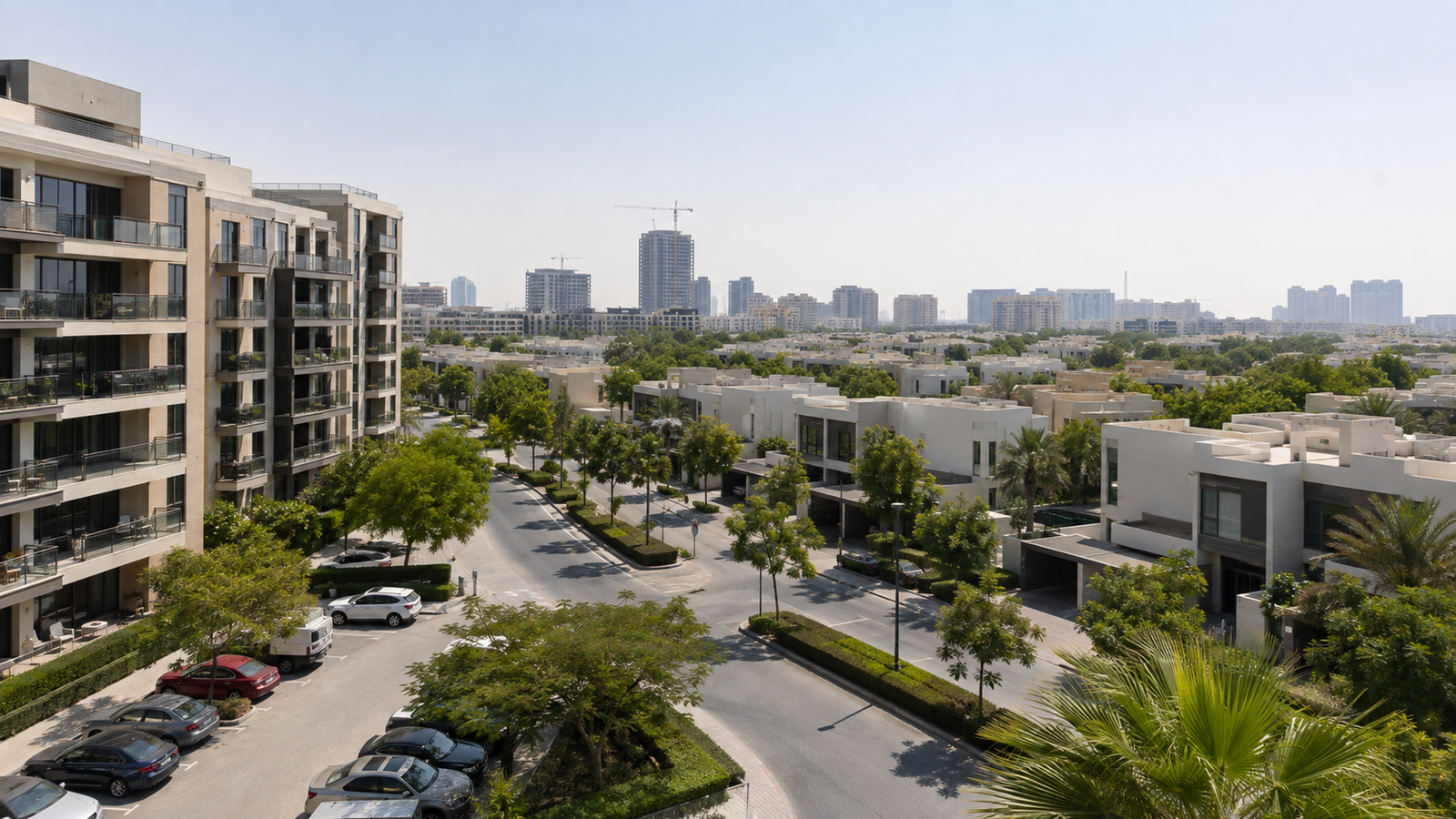
Dubai Rent by Zone: In-Depth Analysis
Zone selection is the most consequential decision in any Dubai rental property investment. Not all zones deliver the same Dubai housing rent performance, and understanding the specific dynamics of each community helps Australian investors match their entry price to the rental income profile they need.
After two years of sharp increases, Dubai's rental market has moved into a phase of moderation. This does not mean rents are falling. In most areas they are flat to marginally up, with premium locations continuing to outperform.
JVC: Balanced Yield and Rent Growth
JVC recorded the strongest combination of rent level and yield consistency among all mid-market communities in 2026. One-bedroom apartments achieve annual rents of AED 65,000 to 85,000, with gross yields of 7.8% supported by the zone's deep and diverse tenant base.
Key JVC Dubai housing rent facts for Australian investors:
-
Annual rent growth in JVC has tracked above the city average since 2023
-
Tenant demand covers mid-income professionals, young families, and corporate staff
-
Low vacancy rates driven by JVC's central location and transport connectivity
-
18,782 total transactions recorded in 2025, the highest of any Dubai community
-
Service charges in JVC vary from AED 8 to 22 per square foot annually depending on the building
JVC suits Australian investors who want documented rent performance, manageable entry prices, and a deep tenant pool that keeps vacancy below the city average. It is the most researched zone among first-time Australian Dubai investors for precisely these reasons.
Business Bay: Corporate Rent Premium
Business Bay delivers a distinct Dubai housing rent profile driven by corporate tenant demand. DIFC executives, finance professionals, and multinational company employees form the core rental market, supporting premium rent levels relative to floor space compared to residential zones further from the city centre.
One-bedroom apartments in Business Bay achieve annual rents of AED 80,000 to 110,000 depending on floor, view, and building quality. Gross yields average 6.5 to 7.07%, with the zone's corporate tenant base supporting strong lease renewal rates and low vacancy even during broader market softness.
The zone is transitioning from mid-market to a luxury extension of Downtown Dubai. Australian investors who entered Business Bay at 2024 pricing are already seeing capital appreciation layered on top of their rental income, creating a combined total return that exceeds what the gross yield alone suggests.
Dubai South: Emerging Rent Growth
Dubai South posted 22.8% price growth in 2025, the highest of any Dubai community, driven by Al Maktoum Airport expansion infrastructure investment. Dubai housing rent in Dubai South is rising alongside those capital values, with one-bedroom apartments now achieving AED 55,000 to 70,000 annually at gross yields of 8.1%.
For Australian investors with longer horizons, Dubai South offers a combination that no established zone can replicate: strong current yield income while the capital growth story from airport infrastructure is still in its early phase. Entry prices starting from AED 500,000 to 600,000 (roughly AUD 205,000 to 245,000) keep the yield-to-price ratio compelling relative to any other growth corridor in Dubai.
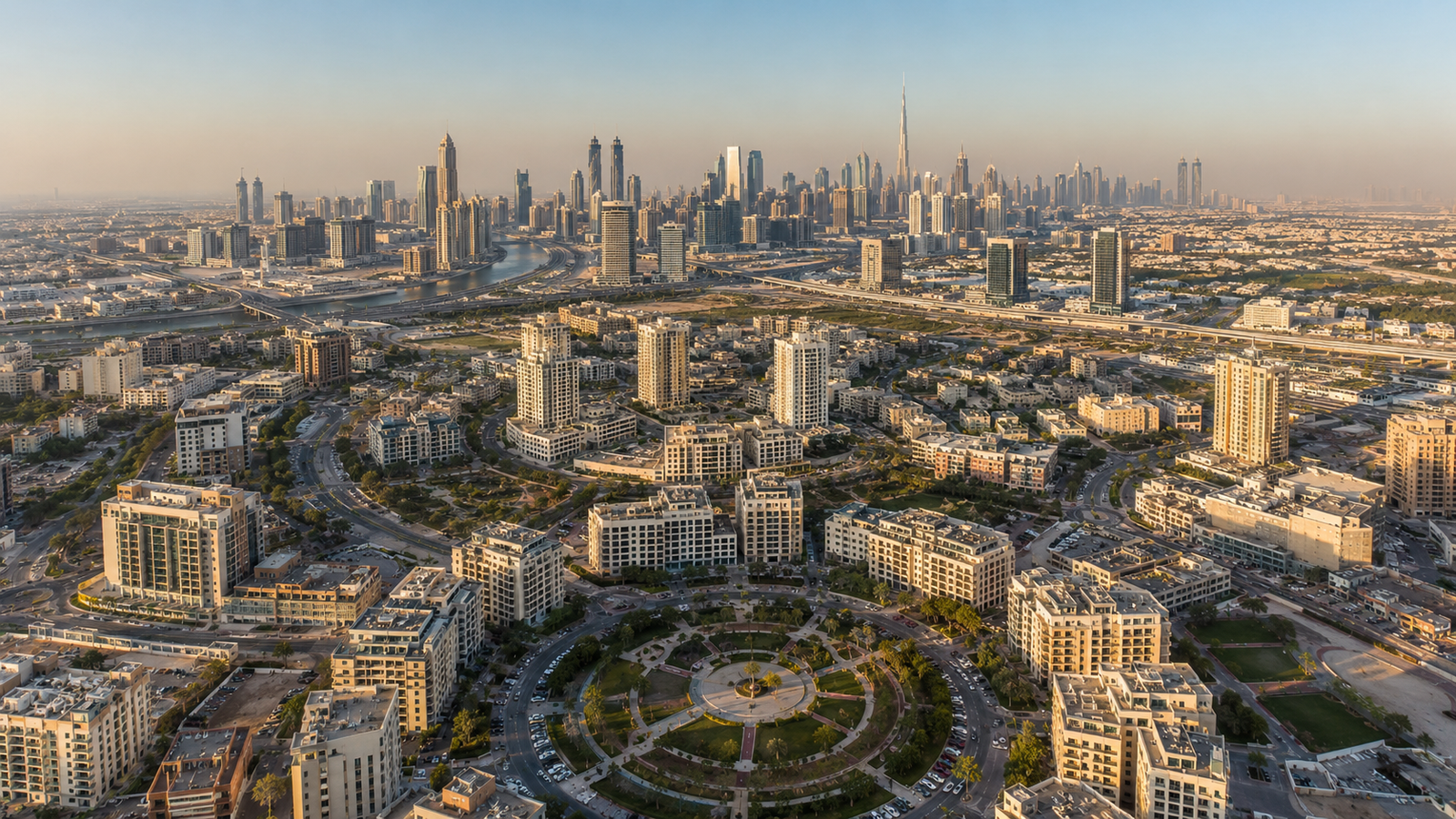
What Tenants Pay Beyond Rent
Understanding what tenants pay on top of Dubai housing rent is important for Australian investors, because it directly affects your property's attractiveness to quality tenants and your vacancy exposure. In Dubai, tenants carry more upfront costs than most Australian renters are familiar with.
Standard Tenant Costs at Signing
Agency commission: typically 5% of annual rent, one-off, paid at signing. Security deposit: usually 5% of annual rent for unfurnished, 10% for furnished. Ejari registration: AED 195, legally required for every tenancy contract in Dubai. DEWA connection deposit: AED 2,000 for apartments, AED 4,000 for villas, refundable.
These upfront costs mean that a tenant signing a one-year lease on a AED 85,000 JVC apartment pays approximately AED 8,000 to 10,000 in upfront costs beyond the first rent installment. This self-selection effect means tenants who commit to Dubai housing rent contracts are financially stable individuals who can absorb those entry costs, which reduces the risk of mid-lease defaults for Australian landlords.
|
Cost Item |
Unfurnished Rate |
Furnished Rate |
Who Pays |
|
Agency commission |
5% of annual rent |
5% of annual rent |
Tenant |
|
Security deposit |
5% of annual rent |
10% of annual rent |
Tenant |
|
Ejari registration |
AED 195 fixed |
AED 195 fixed |
Typically landlord |
|
DEWA deposit (apt) |
AED 2,000 refundable |
AED 2,000 refundable |
Tenant |
|
DEWA deposit (villa) |
AED 4,000 refundable |
AED 4,000 refundable |
Tenant |
Rent Payment Structures in Dubai
Dubai housing rent is typically paid in post-dated cheques rather than monthly direct debit. The most common structures are annual payment in one or two cheques, or quarterly payment in four cheques. Monthly payment is increasingly accepted in newer buildings and furnished units, but remains less common in the mid-market.
For Australian investors, the cheque-based payment system requires a UAE bank account to deposit rental income efficiently. Most property management companies handle cheque collection and banking on your behalf as part of the standard management service, eliminating the need for constant personal involvement from Australia.
The Smart Rental Index and Rent Increases
The continued moderation in rental growth in Dubai can be attributed to the regulatory impact of the Smart Rental Index, used to determine permissible rent increases for existing tenants. Landlords cannot increase rent arbitrarily at renewal. The Smart Rental Index sets maximum permissible increases based on current market benchmarks for the specific zone and building.
For Australian investors, this regulatory framework is a double-edged consideration. It prevents windfall rent increases, but it also protects your rental income from aggressive price cutting by competing landlords in the same building. The index creates a floor as well as a ceiling on Dubai housing rent movements in established zones.
For Australian investors comparing Dubai property management to domestic experience, the tenancy cost structure is different in ways that affect the quality of tenants your property attracts and the lease duration you can negotiate.
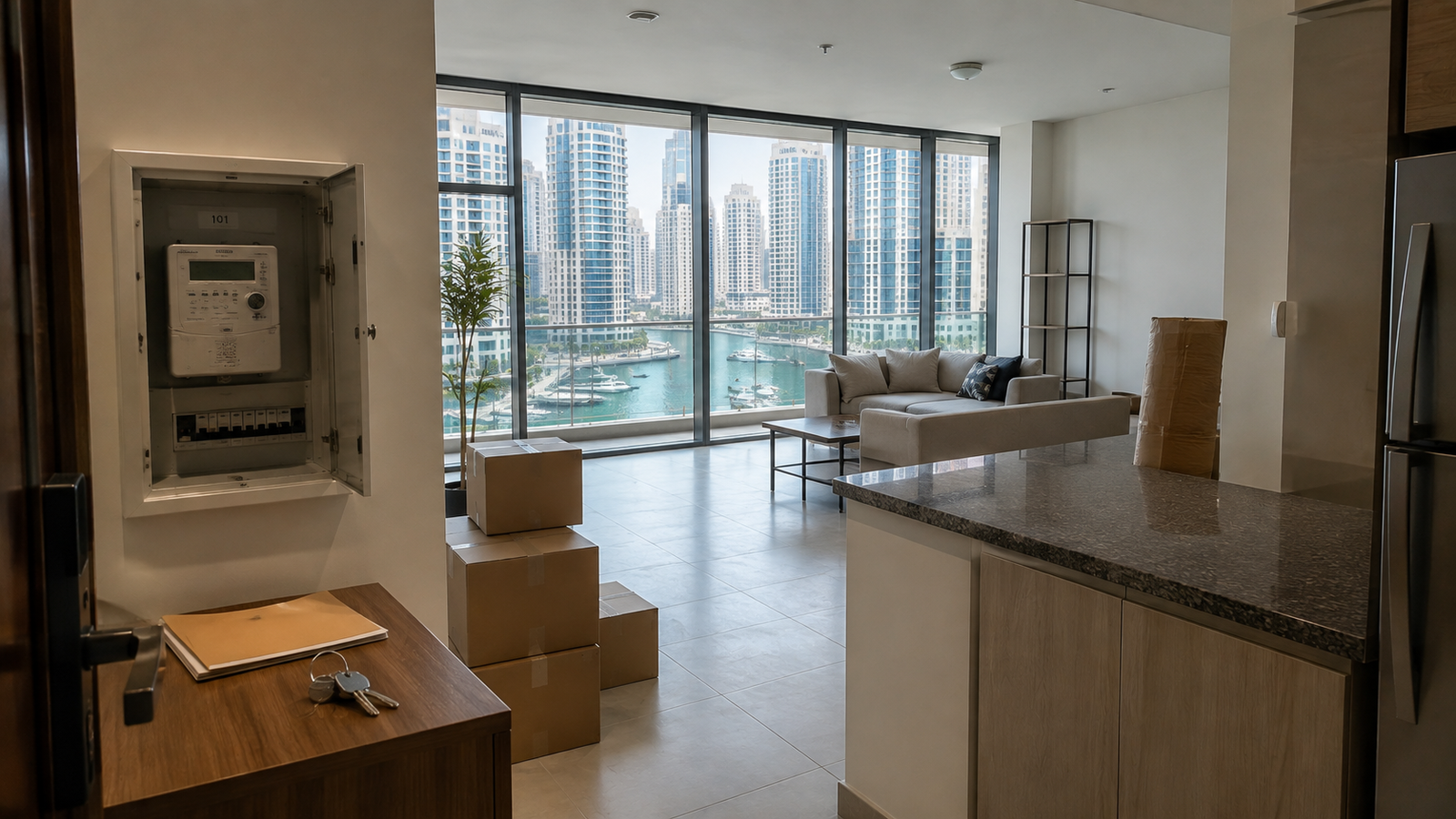
Dubai Rent vs Australian Rent: Full Comparison
The investment case for Australian buyers rests on a direct comparison between what Dubai housing rent delivers as a percentage of purchase price versus what Australian capital city properties deliver on the same metric.
Annual Income Comparison by Budget
|
Investment Budget |
Australian Option |
Dubai Housing Rent Income |
Australian Rental Income |
|
AUD 250,000 |
No entry-level capital city option |
AED 65,000 (JVC studio) approx. AUD 26,500 |
Not applicable |
|
AUD 400,000 |
Brisbane outer suburb unit |
AED 80,000 (JVC 1-bed) approx. AUD 32,650 |
AUD 18,000 to 22,000 |
|
AUD 600,000 |
Melbourne inner suburb unit |
AED 100,000 (Marina 1-bed) approx. AUD 40,800 |
AUD 22,000 to 28,000 |
|
AUD 820,000 |
Sydney inner suburb unit |
AED 140,000 (Marina 2-bed) approx. AUD 57,100 |
AUD 30,000 to 38,000 |
The income gap at every budget level is substantial. Dubai housing rent delivers 40 to 60% more annual income than an Australian property at a comparable purchase price. After Australian income tax is applied to both, the net income difference narrows but remains significantly in Dubai's favor, particularly at higher marginal tax rates where the zero-UAE-tax-at-source structure matters most.
The Tax Position on Dubai Rent
Dubai charges zero rental income tax at source. Every dirham your Dubai tenant pays reaches your account before any deduction. Australian residents must declare all Dubai housing rent as foreign income to the ATO annually. Because no UAE tax applies at source, double taxation does not occur. The 50% CGT discount applies to capital gains at sale for properties held more than 12 months. Always consult a qualified Australian accountant with overseas property experience before finalizing your Dubai rental investment structure.
The projected 5-year total return for top-performing Dubai property types is around 50 to 65% cumulative, combining roughly 20 to 25% price growth with approximately 30 to 40% in net rental income over the period. No Australian capital city residential property can currently project a comparable 5-year total return at equivalent entry prices.
Ready to Earn From Dubai Housing Rent?
Dubai housing rent in 2026 delivers what Australian investors cannot find domestically: documented gross yields of 7 to 9% in mid-market zones, annual rent growth still tracking above inflation in villa markets, and a structural tenant demand base driven by a population that crossed 4 million in 2025 and is growing at 6.1% annually.
The moderation phase Dubai's rental market entered in early 2026 is a feature, not a problem. After two years of 17% rent surges, the market is settling at a level that is sustainable for long-term tenant demand. Stable rents with low vacancy and documented capital growth from zones like Dubai South and Dubai Silicon Oasis create a total return profile that consistently outperforms what Australian property markets are delivering at comparable entry points.
Register your free seat at the Dubai Property Expo Australia and take your first step toward earning high-yield Dubai rental income from Australia today.
Frequently Asked Questions
What is the average rent for an apartment in Dubai in 2026?
According to Property Finder data, the average annual apartment rent in Dubai was AED 90,940 in April 2026, which is approximately AUD 37,100 at current exchange rates. This figure remains 4.4% higher year-on-year compared to April 2025, confirming continued rental income growth despite the market entering a moderation phase.
Which area in Dubai has the highest rental yield in 2026?
International City leads Dubai housing rent yields at 8.9% gross, followed by Dubai Silicon Oasis at 8.5% and Dubai South at 8.1%. For the best combination of yield and entry price accessible to Australian investors, JVC delivers 7.8% gross with one-bedroom apartments achievable from AED 600,000 and the highest transaction liquidity of any Dubai community.
How much has Dubai rent increased in 2026?
Annual rental growth for all residential properties in Dubai eased from 6.2% in December 2025 to 1.5% in April 2026 according to REIDIN data. Apartments recorded 2.1% annual growth while villas continued outperforming at 9.1% year-on-year, reflecting continued strong family tenant demand across established villa communities.
How does Dubai housing rent compare to Sydney or Melbourne?
A JVC one-bedroom apartment achieving AED 80,000 annually (approximately AUD 32,650) represents a 7.8% gross yield on an AED 600,000 purchase, compared to Sydney's average gross yield of 3.1% and Melbourne's 3.6% on properties costing three to four times as much. After Australian income tax on Dubai rental income, the net yield still significantly outperforms the gross yield of comparable Australian capital city assets.
What costs do Dubai tenants pay on top of rent?
Dubai tenants pay an agency commission of 5% of annual rent at signing, a security deposit of 5% for unfurnished or 10% for furnished properties, AED 195 for mandatory Ejari tenancy registration, and a DEWA utility connection deposit of AED 2,000 for apartments or AED 4,000 for villas. These upfront costs are borne by the tenant, not the landlord, and create a self-selection effect that attracts financially stable tenants to Dubai housing rental agreements.