Quick Answer
-
DIFC and Downtown Dubai are open to Australians as freehold zones.
-
DIFC runs under its own legal system, courts, and property registry.
-
Downtown Dubai is registered with Dubai Land Department under onshore law.
-
Only DLD-registered property qualifies for the UAE Golden Visa.
-
DIFC disputes are resolved in English under common law by the DIFC Courts.
Australians researching Dubai property quickly land on two names that seem comparable: DIFC and Downtown Dubai. Both are premium addresses. Both sit along Sheikh Zayed Road within a few kilometres of each other. Both are open to Australian buyers. But treating them as two versions of the same thing is one of the most common mistakes in Dubai property research.
The real difference is not location or price. It is the legal system that governs your ownership, the registry that holds your title, the court that handles your disputes, and whether the property connects to a UAE Golden Visa. One zone operates under standard Dubai onshore law through the Dubai Land Department. The other is a federal financial free zone with its own legislation, its own courts, and a completely separate property register that has nothing to do with DLD.
This guide compares DIFC and Downtown Dubai on the factors that matter to an Australian investor in 2026.
What Each Zone Actually Is
The legal status of each zone determines what you own, who holds the record of it, which court you go to, and which rights attach to your purchase. Understanding the framework before looking at anything else is the only logical place to start.
Downtown Dubai Defined
Downtown Dubai is an onshore freehold community in the Emirate of Dubai, developed by Emaar Properties and designated as an investment area under Regulation No. 3 of 2006 and its amendments. It sits between Business Bay and DIFC and is home to the Burj Khalifa, Dubai Mall and the Dubai Fountain.
All property transactions in Downtown Dubai are registered with Dubai Land Department under onshore Dubai law. The governing legislation is Dubai Law No. 7 of 2006 concerning Real Property Registration. Title deeds are DLD-issued and recorded in the Real Property Register. Off-plan buyer protections, service charge regulations and tenancy rules fall under RERA, which is a division of DLD. Disputes go to the Dubai Courts for ownership matters and to the Rental Disputes Settlement Centre for tenancy matters.
DIFC Defined
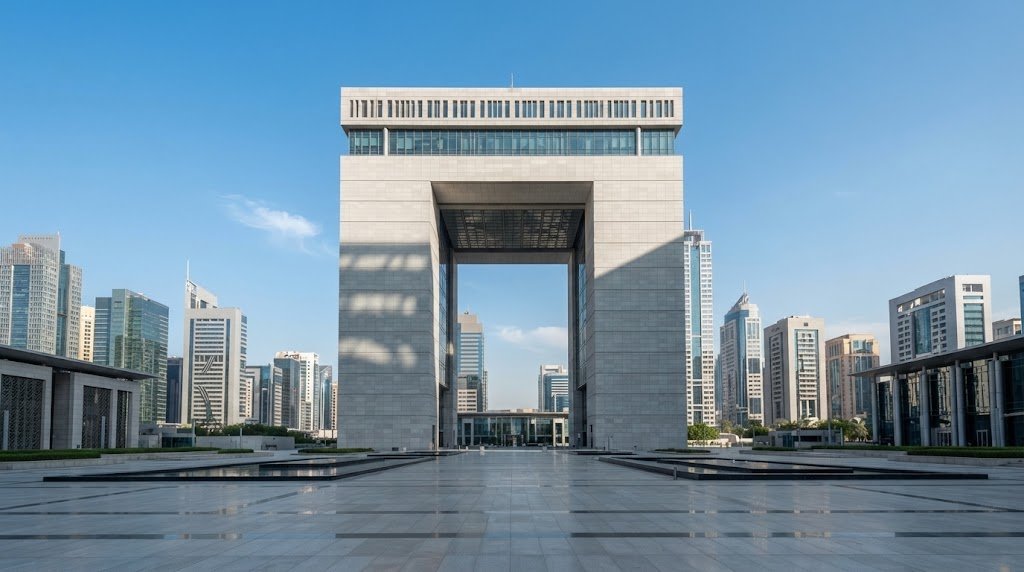
The Dubai International Financial Centre is a federal financial free zone established under UAE Federal Decree No. 35 of 2004 and governed by Dubai Law No. 9 of 2004. It sits physically between Downtown Dubai and Zabeel Park on the east side of Sheikh Zayed Road, but it operates as a completely separate legal jurisdiction from the rest of Dubai.
The table below shows the core framework differences between the two zones at a glance.
|
Factor |
Downtown Dubai |
DIFC |
|
Governing law |
Dubai Law No. 7 of 2006 |
DIFC Law No. 10 of 2018 |
|
Property registry |
DLD Real Property Register |
DIFC Property Register |
|
Title document |
DLD title deed |
DIFC certificate of title |
|
Court for disputes |
Dubai Courts (Arabic) |
DIFC Courts (English common law) |
|
Regulator |
RERA / DLD |
DIFC Authority |
|
Golden Visa eligible |
Yes (at AED 2M) |
No |
The DIFC is not regulated by DLD, RERA or the Dubai Courts for matters inside its boundaries. Its principal law governing property is DIFC Law No. 10 of 2018, which covers ownership, transfer, registration and interests in real property within the DIFC.

Ownership Rights Compared
Both locations allow full freehold ownership for Australian nationals. The rights look similar on the surface, but the legal foundation differs, and that foundation shapes every decision that follows.
Downtown Dubai Ownership
Under onshore Dubai law, freehold ownership in Downtown Dubai gives an Australian buyer full and permanent title to the property and the land it stands on. The practical rights that flow from a DLD-registered title include:
-
A DLD title deed registered on the Real Property Register as proof of ownership
-
The right to sell, lease, mortgage, gift or pass the property to heirs without third-party consent
-
Access to RERA's tenancy regulation framework under Law No. 26 of 2007
-
Access to the Rental Disputes Settlement Centre for tenant disputes
-
Escrow protection under Law No. 8 of 2007 for any off-plan purchases
-
Eligibility for the UAE Golden Visa when the registered property value reaches AED 2 million
Our guide to how to buy property in Dubai covers the full purchase process for Australian buyers from offer through to registered title.
DIFC Property Ownership
Under DIFC Law No. 10 of 2018, freehold ownership within the DIFC gives an Australian buyer full freehold title registered on the DIFC Property Register. The rights include:
-
A certificate of title issued by the DIFC Registrar of Real Property, not a DLD title deed
-
Indefeasible title once registered, meaning the registered owner's title cannot be overturned by prior undisclosed claims
-
The right to transfer, lease or mortgage the property under DIFC law
-
Access to the DIFC Courts for disputes under English common law, conducted in English
-
No nationality or designated area restrictions on who may purchase, confirmed under DIFC Law No. 10 of 2018
The Golden Visa position is the most critical difference for Australian buyers planning around residency. A DIFC property is registered on the DIFC Property Register, which is entirely separate from DLD. A DIFC property does not qualify for the DLD property-linked Golden Visa route regardless of its value.
This is not a minor detail. For many Australian buyers, the Golden Visa is part of the reason for buying Dubai property at all. Buying in DIFC means giving up that route entirely.
The Two Property Registries
The registry difference is the most fundamental structural distinction between the two zones. Which body holds your title shapes every right you exercise from settlement forward.
DLD Real Property Register
Downtown Dubai property is registered on the Real Property Register maintained by Dubai Land Department. This register is the official record of all freehold and leasehold interests across Dubai's onshore designated zones, established under Dubai Law No. 7 of 2006. The key practical implications of DLD registration include:
-
Title verification is available to any buyer through the Dubai REST app, a public DLD digital tool
-
Mortgages are registered on the DLD register and are publicly verifiable
-
Service charge liens are enforceable through RERA and the relevant management entity
-
Transfers are processed through DLD-licensed Real Estate Registration Trustee Centres
-
Golden Visa applications are processed directly through DLD using the registered title deed
-
The Oqood system under Law No. 13 of 2008 protects off-plan buyers by registering their interest before completion
Our full guide to Dubai title deeds for Australian buyers explains the exact DLD registration process, fees and verification steps in detail.
DIFC Property Register
DIFC property is registered on a completely separate register maintained by the DIFC Registrar of Real Property under DIFC Law No. 10 of 2018. The key features of the DIFC Property Register include:
-
All dispositions of real property rights within the DIFC, including freehold title, long-term leases and mortgages, must be registered with the DIFC Registrar on the DIFC Property Register
-
Registration on the DIFC Property Register is conclusive evidence of title under DIFC law
-
The DIFC Registrar issues a certificate of title, not DLD
-
Corporate restructuring within the DIFC where ultimate beneficial ownership remains unchanged can attract a reduced transfer fee of 0.125% rather than the standard rate, under the DIFC Real Property Regulations
-
The DIFC Property Register is entirely independent of DLD and cannot be verified through the Dubai REST app
The two registers are legally separate. A search of the DLD register tells you nothing about DIFC-registered property, and vice versa.
The Courts: Dispute Resolution
For an Australian investor managing property from Sydney or Brisbane, knowing which court applies before something goes wrong is not a minor point. It determines the language, the legal framework and the enforcement mechanism available to you.
Downtown Dubai: Dubai Courts & RERA
Property disputes arising from Downtown Dubai purchases follow the standard Dubai onshore dispute resolution framework through three bodies:
-
Dubai Courts handle property ownership disputes, title challenges and contractual matters under Dubai law, with proceedings conducted in Arabic
-
Rental Disputes Settlement Centre handles tenancy disputes between landlords and tenants under Law No. 26 of 2007
-
RERA handles complaints about developers, management companies and service charge disputes
Translation services are available for Dubai Courts, but the official proceedings are in Arabic. Judgments are enforced through the Dubai Courts' execution system.
DIFC: English Common Law Courts
The DIFC Courts are an independent English-language common law court system established under Dubai Law No. 12 of 2004. They operate within the DIFC jurisdiction and have authority over civil and commercial matters arising within the DIFC. The key features confirmed from the DIFC Courts' official site are:
-
All proceedings are conducted in English under common law principles
-
The DIFC Courts apply DIFC law unless parties explicitly agree that another law governs their dispute
-
The DIFC Courts have the power to enforce judgments, orders and awards made or ratified within the DIFC
-
DIFC Courts' jurisdiction covers company law, contract law, arbitration law, insolvency law, employment law and trust law within the DIFC
-
The DIFC Courts have no jurisdiction over family and matrimonial matters
For Australians, the English-language common law framework of the DIFC Courts operates closer to the legal environment familiar at home than the Arabic-language civil law of the Dubai Courts.
This is a genuine practical advantage for buyers entering commercial property or corporate structures within the DIFC boundary.

DLD Fees at Purchase
Purchase fees are one area where verified official figures are publicly available for both structures.
Downtown Dubai Purchase Fees
Standard DLD fees apply to all Downtown Dubai purchases. The following fees are confirmed from the Dubai Land Department official fee schedule.
The table below shows every government fee for a standard ready property purchase in Downtown Dubai. The DLD transfer fee and trustee office fee sit alongside the title deed fees as separate line items.
|
Fee item |
Amount |
|
DLD transfer fee |
4% of purchase price |
|
Title deed certificate issuance |
AED 250 |
|
Apartment map fee |
AED 250 |
|
Knowledge and innovation fees |
AED 20 |
|
Trustee office fee (property above AED 500,000) |
AED 4,200 plus 5% VAT |
These fees apply to every Downtown Dubai transaction. No developer or agent can reduce the 4% DLD transfer fee. Some developers absorb it within their promotional structure at launch, meaning they pay it on the buyer's behalf, but the fee itself is always paid to DLD.
Our breakdown of DLD fees when buying property in Dubai covers the complete purchase cost stack for every property type.
DIFC Transfer Fees
DIFC operates its own transfer fee structure under the DIFC Real Property Regulations, separate from the DLD schedule. Under the DIFC regulations, a corporate restructuring where the ultimate beneficial ownership does not change can attract a reduced transfer fee of 0.125% rather than the standard rate, confirmed from the DIFC Real Property Regulations.
For individual purchases and standard arm's length transfers, the DIFC Registrar charges its own fee schedule. The exact current DIFC Registrar fee for standard transfers should be confirmed directly with the DIFC Authority at the time of purchase, as it is not published on a public fee page equivalent to DLD's.
UAE VAT applies equally to both zones. The Federal Tax Authority's VAT rules apply uniformly across the UAE, including within free zones. Commercial property sales in both Downtown Dubai and DIFC attract 5% VAT where applicable. Residential sales are typically VAT-exempt, but commercial use triggers the standard rate regardless of whether the property sits inside or outside the DIFC boundary.
Which Structure Suits Which Australian Buyer
Neither zone is categorically better. The right choice depends entirely on what the purchase is for and which rights matter most.
Downtown Dubai a Right Choice
Downtown Dubai suits Australian investors in these situations:
-
Your purchase strategy includes a UAE Golden Visa and the property value reaches AED 2 million
-
You want a DLD-registered title deed verifiable through the Dubai REST app
-
You want RERA's tenancy protection framework for managing a rental property from Australia
-
You are buying off-plan and want RERA escrow protection under Law No. 8 of 2007
-
You want the widest possible resale pool, since DLD-registered property trades within the most liquid onshore Dubai market
-
You want certainty on fees upfront, since DLD publishes its complete fee schedule publicly
Our guide to Dubai off-plan property projects covers the full protection structure for buyers during construction.
When DIFC Is the Right Choice
DIFC suits a more specific buyer profile:
-
You are a professional or corporate buyer connected to financial services who wants to live and work within the same precinct
-
You want disputes handled in English under common law rather than Arabic civil law
-
You are purchasing through a corporate structure and want the flexibility of DIFC's reduced-fee corporate restructuring provisions
-
You specifically do not require the Golden Visa from this purchase
-
You value the DIFC Courts' common law enforcement framework for commercial dispute resolution
Our guide to the Dubai Golden Visa cost covers every eligible route for Australians, including routes that do not require DLD-registered property.
Australian buyers should compare both locations based on ownership rights, legal protections, visa eligibility, and long-term investment goals before deciding.
The DIFC Wills Service Centre
One institution that sits within the DIFC but matters to Australian buyers in both zones is the DIFC Wills Service Centre.
Non-Muslim Australians owning property anywhere in the UAE, whether in DIFC, Downtown Dubai or any other community, can register a will with the DIFC Wills Service Centre. The will operates under common law and ensures property passes according to the owner's instructions rather than under UAE Sharia default inheritance rules.
This matters because the UAE's default inheritance framework applies Sharia principles to assets located in the UAE when no registered will exists. For non-Muslim Australian owners, this can produce an outcome that does not reflect their intentions.
Registering a DIFC will removes that uncertainty. It does not require owning property in the DIFC itself. It covers all UAE-located assets named in the will.
Registering a DIFC will is not mandatory, but it is strongly advisable for any non-Muslim Australian holding Dubai property regardless of where that property is located in the UAE.
Know the Framework Before You Choose the Zone
The choice between DIFC and Downtown Dubai is not about location preferences or lifestyle fit. It is about which legal framework governs your ownership, which court handles your disputes, and whether the purchase connects to the other rights you want to build. Both are legitimate choices for the right buyer profile. Neither is better in the abstract.
Speak with an adviser before you commit to either zone. Come to the next Dubai Property Expo where you can ask these questions directly and get answers based on your specific investment goals.
Register your interest at Dubai Property Expo to connect with the right people before your purchase.
Frequently Asked Questions
Can Australians buy property in both DIFC and Downtown Dubai?
Yes. Both zones grant full freehold ownership rights to Australian nationals — Downtown Dubai under Regulation No. 3 of 2006, and DIFC under Law No. 10 of 2018.
Does DIFC property qualify for the UAE Golden Visa?
No. The Golden Visa property route requires a DLD-registered property at AED 2 million minimum. DIFC property sits on a separate registry and does not qualify regardless of value.
What is the difference between a DLD title deed and a DIFC certificate of title?
Both prove legal ownership but sit in entirely separate registries under separate legal systems. Only a DLD title deed connects to DLD services such as Golden Visa applications and mortgage registration.
Which court handles disputes for each zone?
Downtown Dubai disputes go to the Dubai Courts in Arabic under Dubai onshore law. DIFC disputes go to the DIFC Courts in English under common law.
Can I register a DIFC will even if I do not own DIFC property?
Yes. The DIFC Wills Service Centre is open to all non-Muslim foreign nationals holding property anywhere in the UAE, making it relevant for any Australian Dubai property owner.