Quick Answer:
- STR income: A Dubai Marina one-bedroom earns AED 110,000 to 140,000 annually on short-term platforms
- Occupancy: Dubai short-term rentals average 73% occupancy with AED 638 average daily rate
- Licence required: Every Dubai holiday home from Australia needs a DET permit before listing
- Best zones: Dubai Marina, Downtown Dubai, JBR, Palm Jumeirah, and JVC lead on STR returns
- STR vs long-term: Short-term rental delivers 30 to 50% premium over a standard 12-month lease
Australian investors typically hear about Dubai property through the rental yield story. What most miss is the short-term rental layer sitting above it. A Dubai holiday home from Australia is not just a long-term investment asset. Managed correctly, it becomes a high-performance income generator delivering returns that long-term leases cannot match.
Dubai’s tourism sector crossed 17 million visitors in 2025. Record tourist arrivals, a government framework that actively encourages legal holiday homes, and a deep pool of professional short-term rental operators make the dubai holiday home from australia opportunity genuinely accessible for investors who have never set foot in Dubai.
This guide covers everything Australian investors need to know about buying and operating a Dubai holiday home from Australia in 2026. You will learn the exact income numbers, the DET licensing requirements, the best zones for short-term rental performance, the full cost structure, and how to manage the property remotely from anywhere in Australia.
What Is a Dubai Holiday Home?
A Dubai holiday home is a privately owned residential property licensed by Dubai’s Department of Economy and Tourism (DET) to operate as short-term accommodation. It functions like an Airbnb or Vrbo property but operates inside a government-regulated framework specific to the UAE.
Driven by record tourist arrivals exceeding 17 million visitors in 2025 and a government framework that encourages legal holiday homes, Dubai now offers property investors a credible alternative to traditional long-term leasing.
Short-Term vs Long-Term Income Comparison
The income gap between short-term holiday home operation and a standard annual lease is the clearest argument for exploring the holiday home model as an Australian buyer.
A well-managed one-bedroom apartment in Dubai Marina can generate AED 110,000 to 140,000 annually on short-term platforms, compared with AED 80,000 to 95,000 on a standard 12-month tenancy contract. That is a 30 to 50% premium, and it is achievable within a fully regulated system.
The income premium comparison across property types and zones:
| Property Type | Zone | Long-Term Annual Rent | Short-Term Annual Gross | STR Premium |
| 1-bedroom apartment | Dubai Marina | AED 80,000 to 95,000 | AED 110,000 to 140,000 | 30 to 50% |
| 1-bedroom apartment | Downtown Dubai | AED 90,000 to 110,000 | AED 120,000 to 160,000 | 33 to 45% |
| Studio | JVC | AED 45,000 to 60,000 | AED 65,000 to 90,000 | 44 to 50% |
| 2-bedroom apartment | Palm Jumeirah | AED 150,000 to 200,000 | AED 220,000 to 300,000 | 47 to 50% |
The premium comes with conditions. You need a valid DET holiday home licence, compliance with Dubai’s tourism taxes, professional-grade furnishing, and a management strategy that accounts for seasonal occupancy variation.
Market Size and Tourism Demand
A typical short-term rental in Dubai has a median revenue of AED 172,000 in the 12 months to January 2026, with 22,719 active listings and an occupancy rate of 73%. Dubai ranks in the top 15% for short-term rental yield in the Middle East and North Africa region.
These are market-wide averages. Well-positioned dubai holiday home from australia investments in prime tourist zones with professional management consistently outperform the market median. Dubai Marina, Downtown, and JBR properties with quality furnishing and professional guest communication regularly achieve occupancy rates of 75 to 85% year-round.
DET Licence: Legal Requirements
Operating a dubai holiday home from australia without a DET licence is illegal under UAE law. This is the non-negotiable first step before listing on any short-term rental platform.
As of early 2026, running an Airbnb in Dubai is legally possible, but it only works if the property has a Dubai holiday-home permit and the building allows short-term rentals.
Understanding the licensing framework before purchase prevents the most common mistake Australian investors make: buying in a building that does not permit short-term rentals.
DET Holiday Home Licence Requirements
The Dubai Department of Economy and Tourism issues two categories of holiday home licence:
- Individual host licence: Issued directly to the property owner for self-managed holiday home operation
- Holiday home operator licence: Issued to professional management companies who operate multiple properties on behalf of owners
For Australian investors managing a Dubai holiday home from Australia remotely, the most practical approach is engaging a licensed holiday home operator. They handle the DET licence application, platform listing management, guest communication, cleaning, maintenance, and all compliance requirements on your behalf.
Key documentation required for DET licence application includes:
- Title deed or Oqood document confirming property ownership
- No-objection certificate from the building’s master developer (critical: confirm this before purchase)
- Property photos meeting DET specification standards
- Valid owner passport and UAE contact details
The building’s master developer NOC is the most frequently overlooked requirement. Not every Dubai building permits holiday home operation. Always confirm NOC eligibility with the developer before committing to a purchase specifically targeting the short-term rental strategy.
Tourism Tax and Compliance
Licensed dubai holiday homes in Australia are subject to the UAE Tourism Dirham fee, which is charged per bedroom per night and collected from guests. This is not a cost absorbed by the owner. It is passed directly to the guest at the point of booking and remitted to the DET by the operator.
As a non-resident Australian operating through a licensed management company, your operator handles all tourism tax collection and remittance as a standard part of their service. This compliance burden does not fall on you as the remote property owner.
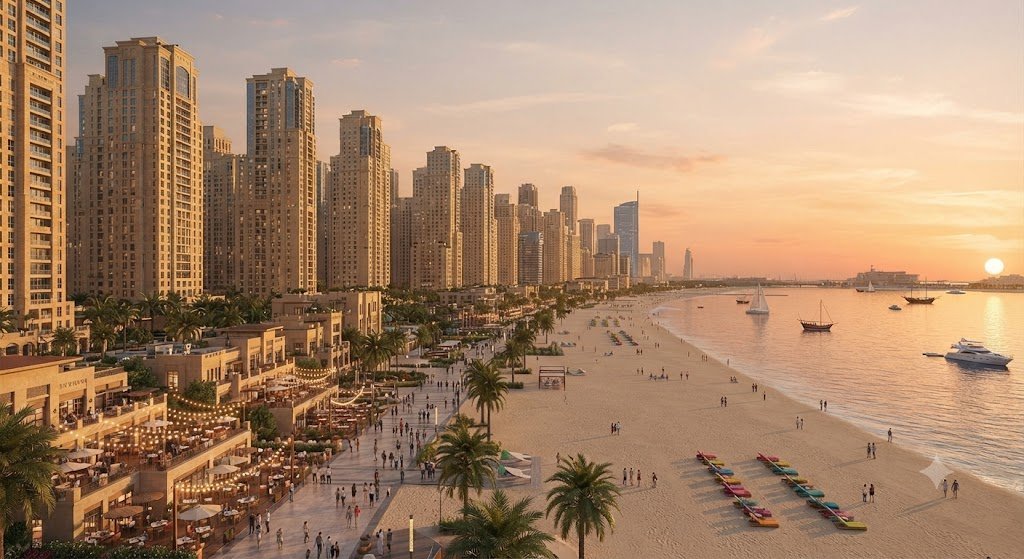
Best Zones for Dubai Holiday Home Investment
Location is the most consequential single decision in any dubai holiday home from australia strategy. Short-term rental performance depends heavily on proximity to tourist attractions, transport connectivity, and the specific building’s reputation on booking platforms.
Dubai Marina remains a top 5 most-searched neighbourhood on Airbnb by international visitors. Dubai’s tourism sector targets 25 million visitors annually. Here is how the top zones compare specifically for short-term rental performance in 2026.
Dubai Marina: Top STR Performer
Dubai Marina is the perennial leader for tourist accommodation. Marina offers beach access, a walkable promenade, abundant dining and retail, and strong transport links via the Metro and Tram. Average daily rates for a well-furnished one-bedroom range from AED 350 to 550 depending on season. Year-round occupancy averages 75 to 85%.
For a dubai holiday home from australia targeting maximum short-term rental income, Marina is the benchmark zone. Entry prices for one-bedroom apartments start from approximately AED 900,000 to 1,200,000 (roughly AUD 368,000 to 490,000). Competition is significant, with over 3,000 active holiday home listings in the Marina corridor. Differentiation through quality furnishing and superior guest communication is essential to achieve the upper end of the occupancy and rate range.
Short-term holiday home potential in Dubai Marina for a one-bedroom at 72 to 78% occupancy sits at AED 140,000 to 185,000 per year, with a higher gross yield of 8.5 to 12%, requiring active management at a 15 to 20% operator fee. The strategy provides greater flexibility for personal use during gaps.
The Marina suits Australian investors who want a dual-purpose asset: maximum short-term income when the property is let, combined with personal use access during periods the investor visits Dubai.
JVC: Best Yield-to-Price for STR
A JVC studio earning AED 85,000 gross on Airbnb represents an 11.3% gross yield on an AED 750,000 property. In affordable communities like JVC and Business Bay, the effort-to-return ratio for Airbnb is most favorable because property values are lower while nightly rates remain competitive.
For Australian investors targeting the strongest percentage yield from a dubai holiday home from australia, JVC delivers a compelling case. Entry prices start from AED 600,000 to 800,000 (roughly AUD 245,000 to 325,000), and the STR gross yield percentage significantly exceeds what Marina or Downtown can deliver at their higher price points.
The tenant base in JVC’s short-term rental market skews toward business travelers, visiting families, and medium-stay professionals rather than pure tourism. This creates a more stable occupancy pattern with lower seasonal volatility than beachfront Marina properties.
Downtown Dubai and Palm Jumeirah: Premium Income Zone
Downtown Dubai and Palm Jumeirah suit Australian investors targeting the highest absolute income from a dubai holiday home from australia, with the trade-off of higher entry prices and premium furnishing requirements.
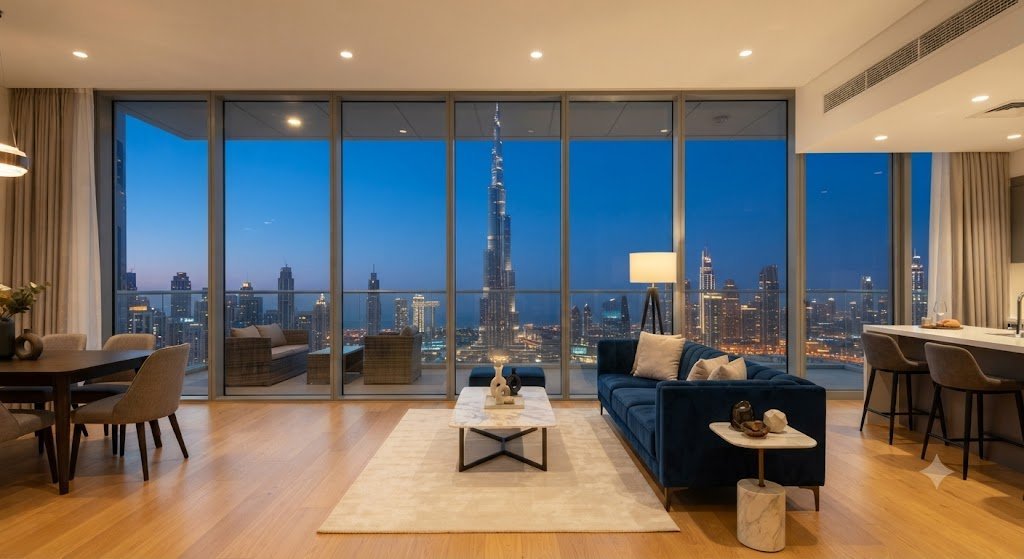
Palm Jumeirah two-bedroom apartments on short-term platforms can generate AED 220,000 to 300,000 annually at strong occupancy rates. Downtown one-bedrooms with Burj Khalifa views command premium nightly rates of AED 500 to 900 depending on season. These zones attract high-spending short-stay tourists and corporate visitors willing to pay significant premiums for iconic addresses.
STR Income and Yield Comparison by Zone
Here is the full income and yield comparison for Australian investors evaluating a dubai holiday home from australia across the primary STR zones in 2026.
| Zone | Entry Price AED | Entry Price AUD | STR Annual Gross | STR Gross Yield | Long-Term Annual | LTR Gross Yield |
| JVC (studio) | 650,000 to 800,000 | AUD 265,000 to 327,000 | AED 65,000 to 90,000 | 9 to 11% | AED 45,000 to 60,000 | 6.5 to 8% |
| Dubai Marina (1-bed) | 900,000 to 1,200,000 | AUD 368,000 to 490,000 | AED 110,000 to 140,000 | 10 to 12% | AED 80,000 to 95,000 | 7 to 9% |
| Downtown (1-bed) | 1,200,000 to 1,800,000 | AUD 490,000 to 735,000 | AED 120,000 to 160,000 | 8 to 10% | AED 90,000 to 110,000 | 6 to 7% |
| Palm Jumeirah (2-bed) | 2,500,000 to 4,000,000 | AUD 1,020,000 to 1,633,000 | AED 220,000 to 300,000 | 7 to 9% | AED 150,000 to 200,000 | 5 to 7% |
Managing a Dubai Holiday Home From Australia
Remote management is the operational backbone of a successful dubai holiday home from australia strategy. Professional holiday home operators exist specifically to serve non-resident Australian owners who cannot be present for day-to-day operations.
Yields vary sharply by area, building, and whether your plan is long-term leasing or holiday homes. For Australians doing UAE property investment, the key 2026 reality is that Dubai is not one market. The exact building, the unit view and layout, current comparable leases, and the true operating costs all determine whether STR performs above or below the market average.
Choosing a Holiday Home Operator
Professional holiday home operators in Dubai offer full-service packages covering every aspect of STR management for remote Australian owners:
- DET licence application and annual renewal
- Platform listing setup and optimization on Airbnb, Booking.com, and Vrbo
- Dynamic pricing management to maximize nightly rate across seasons
- Guest communication, check-in coordination, and review management
- Housekeeping, linen management, and maintenance coordination
- Monthly financial reporting in AUD-converted statements
- Compliance with all DET regulations and tourism tax remittance
Operator fees for full-service Dubai holiday home management typically run 15 to 20% of gross rental income. This cost is fully deductible against your Australian rental income declaration to the ATO.
Cost Structure for STR Operations
Beyond the operator fee, the full cost structure for a dubai holiday home from australia includes:
| Cost Item | Annual Amount | Notes |
| Holiday home operator fee | 15 to 20% of gross revenue | Covers all management services |
| Furnishing amortization | AED 5,000 to 10,000 | Amortized over 3 to 5 years |
| Building service charges | AED 12 to 25 per sq ft | Varies by building and zone |
| DET licence fee | AED 1,520 to 7,500 | Per bedroom per year |
| Platform fees (Airbnb) | 3% per booking | Paid by operator on your behalf |
| Maintenance reserve | 1 to 2% of property value | Annual budget allocation |
After all operating costs, a well-managed dubai holiday home from australia in JVC or Marina typically delivers net yields of 6 to 8.5%. That still significantly outperforms long-term net yields in any Australian capital city.
ATO Reporting for Holiday Home Income
Short-term rental income from a dubai holiday home from australia follows the same ATO reporting framework as long-term Dubai rental income. Australian residents must declare all Dubai STR income as foreign income annually. Because the UAE charges zero tax at source, double taxation does not apply.
Allowable deductions against your Dubai STR income in Australia include operator fees, furnishing costs, building service charges, DET licence fees, and maintenance expenses. The 50% CGT discount applies to capital gains on the property at sale if held for more than 12 months. Always consult a qualified Australian accountant with overseas property experience before finalizing your purchase and management structure.
Ready to Invest in a Dubai Holiday Home From Australia?
A dubai holiday home from australia combines what no Australian investment property can: short-term rental yields of 9 to 12% gross in top zones, zero UAE tax at source, personal use flexibility during gap periods, and participation in a tourism market targeting 25 million visitors annually.
The income case is documented and current. A well-managed Dubai Marina one-bedroom earning AED 140,000 annually on short-term platforms compares with AED 95,000 on a standard lease. At a purchase price of AED 1,000,000, that represents a 14% gross income advantage from choosing the short-term strategy in the right building with the right operator.
Register your free seat at the Dubai Property Expo Australiaand access live projects, confirmed pricing, DET-eligible building lists, and short-term rental yield projections from RERA-licensed developer representatives across Sydney, Melbourne, Brisbane, Perth, and the Gold Coast today.
Frequently Asked Questions
Can Australians legally operate a holiday home in Dubai?
Yes. Australians can legally purchase and operate a Dubai holiday home from Australia through Dubai’s DET holiday home licensing framework. The property must hold a valid DET licence before any listing on short-term platforms. The most common approach for Australian investors is engaging a licensed Dubai holiday home operator who manages the licence, platform listing, guest communication, and compliance on your behalf remotely. The building must also provide a no-objection certificate from the master developer before the licence can be issued.
How do I manage a Dubai holiday home from Australia remotely?
Professional holiday home operators in Dubai provide full-service remote management for Australian owners. Services include DET licence management, platform listing optimization on Airbnb and Booking.com, dynamic pricing, guest communication, housekeeping, maintenance, and monthly AUD-converted financial reporting. Operator fees run 15 to 20% of gross rental income and are fully deductible against your Australian income tax declaration. Select an operator with RERA-licensed status, verifiable occupancy performance data, and a documented track record managing properties in your target zone.
What income can I expect from a Dubai holiday home in 2026?
Income varies by zone, building, furnishing quality, and management standard. A well-managed one-bedroom in Dubai Marina generates AED 110,000 to 140,000 annually at 72 to 78% occupancy on short-term platforms, compared to AED 80,000 to 95,000 on a standard 12-month lease. In JVC, a studio earning AED 85,000 gross on Airbnb represents an 11.3% gross yield on an AED 750,000 property. After operator fees of 15 to 20% and all other holding costs, net yields typically run 6 to 8.5% for well-positioned Dubai holiday home from Australia investments.
What is the DET holiday home licence and how do I get it?
The DET holiday home licence is issued by Dubai’s Department of Economy and Tourism and is mandatory for any short-term rental operation in Dubai. It requires a title deed or Oqood document, a no-objection certificate from the building’s master developer, property photos meeting DET specifications, and valid owner identification. For Australian investors managing remotely, a licensed Dubai holiday home operator handles the full licence application and annual renewal as part of their management service.
What are my ATO obligations for Dubai holiday home income?
All income from a dubai holiday home from australia must be declared to the ATO as foreign income on your annual tax return. Because the UAE charges zero tax at source, double taxation does not apply. You pay Australian income tax at your marginal rate on the gross STR income received. Allowable deductions include operator management fees, furnishing amortization, DET licence costs, building service charges, and maintenance expenses. The 50% CGT discount applies to capital gains at sale for properties held more than 12 months.